Nervelin Official Website › What the label claims
What the label claimsWhat Does The Nervelin Label Claim?
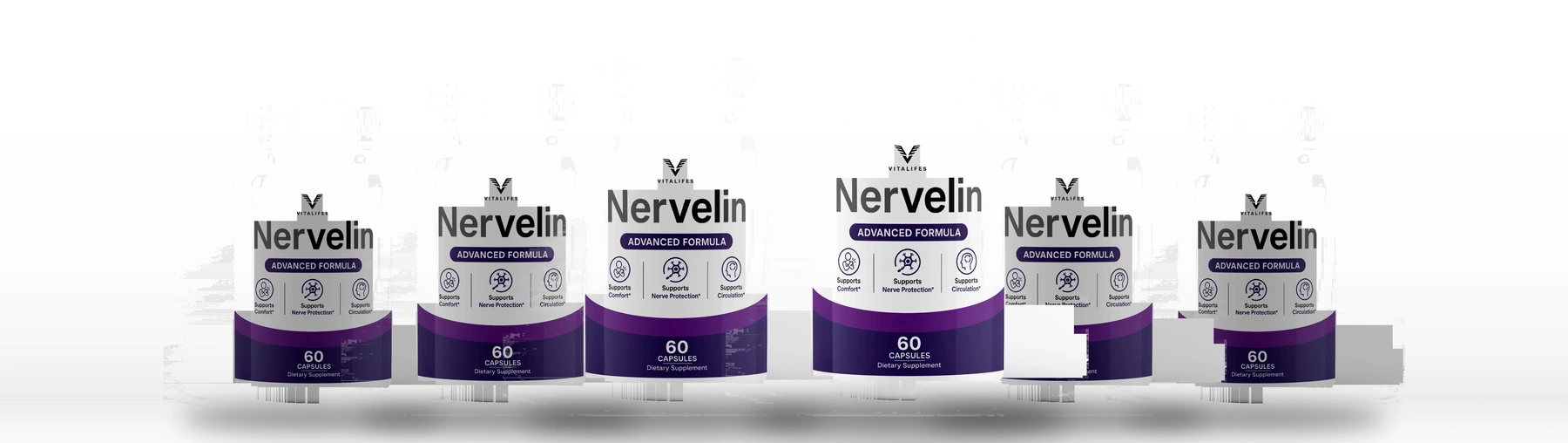
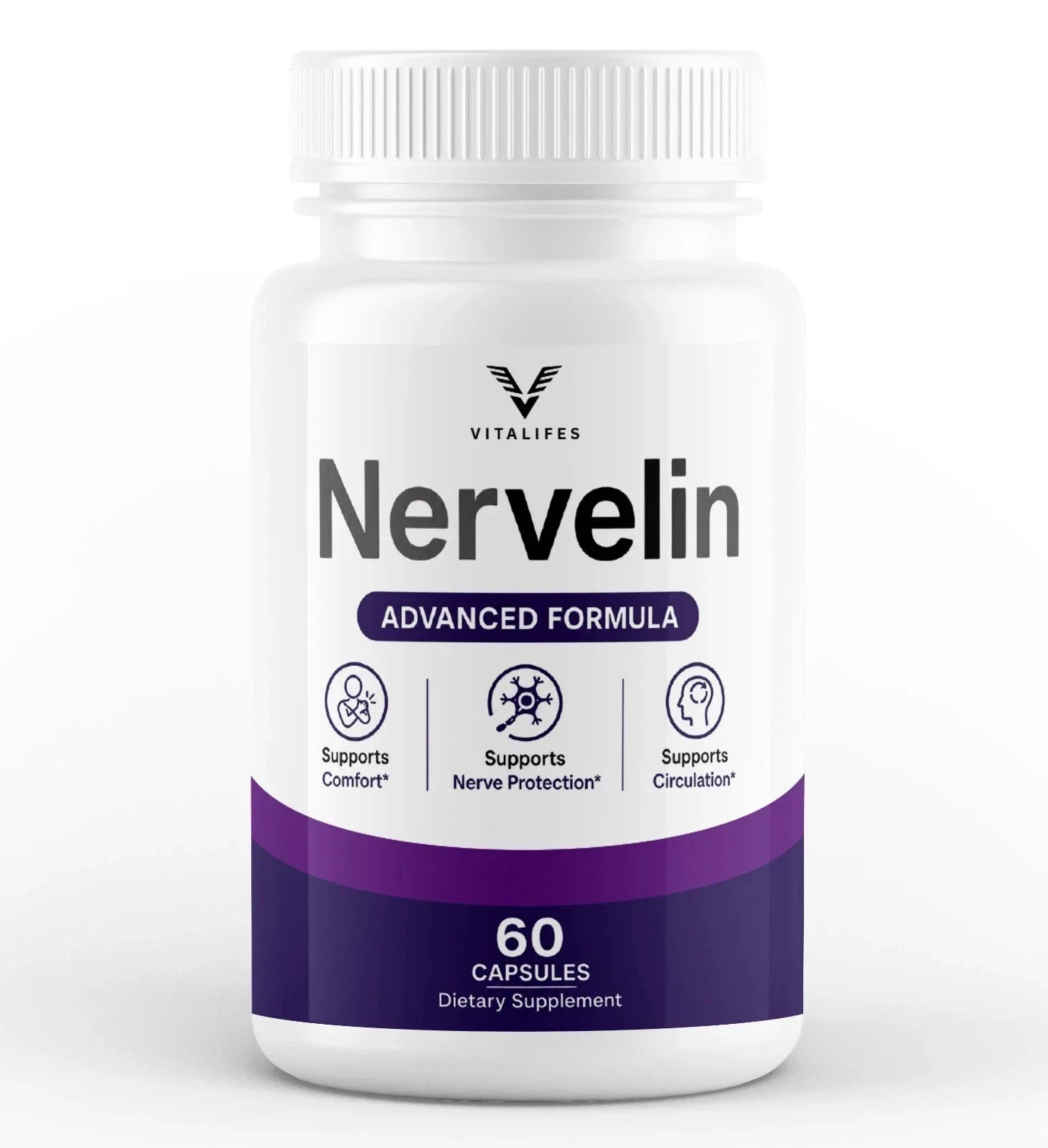
The Nervelin carton prints three lines: supports comfort, supports nerve protection, supports circulation.
Those are structure and function statements, the only class of claim a dietary supplement may make. This page prints them as the carton has them and sets the published record beside each, including where that record is empty.
The ceiling on everything anyone may tell you about this bottle, in the carton’s own words.
What does the Nervelin label claim?
Three lines, what each kind of claim is allowed to say, and what is behind each.
Three short lines sit under three icons on the front of the carton. They are the whole of what this product says about itself, and everything on this website is measured against them.
| The printed line | What that kind of claim means | What sits under it here |
|---|---|---|
| Supports Comfort | A structure and function statement about comfort, which is the broadest of the three and the hardest to test | No trial of any of the nine measured comfort as an endpoint |
| Supports Nerve Protection | A structure and function statement about nerve tissue | No randomised human trial exists for any row on this panel in peripheral nerve symptoms |
| Supports Circulation | A structure and function statement about circulation | The nearest record is animal work on nitric oxide synthase with the horny goat weed fraction |
The middle column describes the class of claim rather than the evidence. The right column is what this desk found when it went looking for the evidence.
Those three lines are reported here because they are printed on the product a buyer receives. They are not restated as this desk’s own view, and the reason is in the right-hand column above rather than in an opinion.
Why the Nervelin carton is worded the way it is
The rule behind the wording on every carton in this category, including this one.
Dietary supplements in the United States are not approved before sale. A company may make a structure and function claim — that a product supports a normal body function — and may not claim to diagnose, treat, cure or prevent a disease. Peripheral neuropathy is a disease, so no supplement may claim to treat it.
That single rule explains most of the odd grammar in this aisle. “Supports nerve protection” is the sentence a company writes when the sentence it wants is not available. The phrasing is a legal ceiling rather than a description of a result.
The corollary is useful when shopping. Any product in this category promising to repair nerves, reverse neuropathy or cure numbness has stepped outside the rule, and a company casual about the claims rule is not a safe bet on sourcing either. NCCIH’s overview of dietary and herbal supplements covers the ground for a general reader.
It also means the interesting question about any bottle here is not what it claims. Every carton in the aisle claims much the same thing. The question is what is inside it, and in what amount.
What a buyer can reasonably expect from Nervelin
Six things this bottle does deliver, with nothing on the list that needs a caveat.
Stripping out everything the evidence does not support leaves a shorter list, and the short list is worth having because every item on it is true.
- A complete ingredient list, nine botanicals named, six with a plant part and one with a species. A great deal of this bracket names a blend and stops.
- A clear serving: two capsules, thirty servings, thirty days. Bottle life is unambiguous, which is not universal here.
- A daily routine that is easy to keep, which is the single best predictor of whether a bottle is ever finished.
- Four rows with genuine metabolic evidence behind them, in a chain that runs upstream of one of the commonest causes of these symptoms.
- Two rows with human trials at doses the papers state, which is what makes the comparison on the ingredients page possible at all.
- A traceable lot, one desk for tracking and refunds, and a return window printed on the listing.
What is not on that list is a nerve result, and no amount of rearranging the evidence puts one there. The mechanism page works through why the chain is long, and the section below names what a panel would need before anyone could write a shorter one.
What would a Nervelin panel need to support the front of its own carton?
Three compounds, three trial doses, and the sum that follows from putting them beside a 1,000 mg total.
This is the most useful question on the page, because it is answerable from published trials rather than from opinion. Three compounds have randomised controlled trials in peripheral nerve symptoms, and each of them reports a dose.
| Compound | The dose its trials used | The study behind it |
|---|---|---|
| Alpha-lipoic acid | 600 mg a day | a critical review of thioctic acid in symptomatic diabetic polyneuropathy |
| Benfotiamine | 300 mg and 600 mg a day | the BENDIP randomised trial, with the BOND study over twelve months |
| Acetyl-L-carnitine | 2,000 mg a day orally | a long-term randomised, double-blind, placebo-controlled study |
Three compounds, three doses, three trials. None of the three appears on this panel, which is a fact a reader can verify against the bottle in about ten seconds.
Set those figures against a 1,000 mg blend shared by nine ingredients and the arithmetic answers itself: alpha-lipoic acid alone, at its trial dose, would need more than half the total. That is why this desk reports the three printed lines rather than asserting them, and why the 2024 review of current US guidance is linked here rather than paraphrased.
None of that makes the bottle a bad daily capsule. It makes it a different product from the one the front of the carton suggests, and a buyer is better off knowing which of the two is in the box.
What about the Nervelin marketing panels?
Where the seller’s graphics sit relative to the carton, and why their wording stays on them.
Two further graphics ship with the product art. They are the seller’s own marketing material rather than anything printed on the bottle, and their headlines reach past the three lines the carton carries.
This desk shows both of them on the home page so a buyer can see exactly what arrived with the listing, and quotes neither. No citation in this website’s reference list supports what is set on them, and searching for one returned nothing.
The working rule is simple enough to state in a sentence: the carton is what arrives in the box, so the carton is the ceiling. A graphic that goes further is shown rather than repeated, and where the two disagree the bottle wins.
Nervelin claims: common questions
What are the benefits of Nervelin?
The carton prints three: supports comfort; supports nerve protection; supports circulation. Those are structure and function statements, which is the only class of claim a dietary supplement may make, and this website reports them rather than asserting them.
Does it treat neuropathy?
No, and no dietary supplement may claim to. Peripheral neuropathy is a disease, the claims rule excludes disease claims, and no ingredient on this panel has a randomised human trial in nerve symptoms behind it.
Will it help with numbness or burning?
Nothing published on these nine ingredients measured that. Four rows have metabolic evidence that sits upstream of one of the commonest causes, which is a real connection several steps removed from a sensation.
What about circulation?
The nearest record is animal work on nitric oxide synthase with the horny goat weed fraction. The one controlled human trial of those prenylflavonoids measured bone markers over six weeks.
Why does this website not repeat the claims on the bottle?
Because reporting what a label prints and asserting it are two different things. The three lines are printed here in full, in the carton’s own words, with what the published record does and does not contain beside them.
Is it FDA-approved?
No. Dietary supplements are not approved before sale in the United States. These statements have not been evaluated by the Food and Drug Administration, and this product is not intended to diagnose, treat, cure or prevent any disease.
Sources behind the Nervelin claims analysis
The three nerve-trial records, the guideline review, and the two general references this page points at.
- Ziegler D. Thioctic acid for patients with symptomatic diabetic polyneuropathy: a critical review. Treat Endocrinol. 2004;3(3):173-89. PMID 16026113. Dose used: 600 mg/day. https://pubmed.ncbi.nlm.nih.gov/16026113/
- Stracke H, Gaus W, Achenbach U, et al. Benfotiamine in diabetic polyneuropathy (BENDIP): results of a randomised, double blind, placebo-controlled clinical study. Exp Clin Endocrinol Diabetes. 2008;116(10):600-5. PMID 18473286. Doses used: 300 mg/day and 600 mg/day. https://pubmed.ncbi.nlm.nih.gov/18473286/
- Bonhof GJ, Sipola G, Strom A, et al. BOND study: a randomised double-blind, placebo-controlled trial over 12 months to assess the effects of benfotiamine on morphometric, neurophysiological and clinical measures in patients with type 2 diabetes with symptomatic polyneuropathy. BMJ Open. 2022;12(2):e057142. PMID 35115359. https://pubmed.ncbi.nlm.nih.gov/35115359/
- De Grandis D, Minardi C. Acetyl-L-carnitine (levacecarnine) in the treatment of diabetic neuropathy. A long-term, randomised, double-blind, placebo-controlled study. Drugs R D. 2002;3(4):223-31. PMID 12455197. Dose used: 1,000 mg/day intramuscular for 10 days, then 2,000 mg/day orally for the remaining 355 days. https://pubmed.ncbi.nlm.nih.gov/12455197/
- Mallick-Searle T, Adler JA. Update on Treating Painful Diabetic Peripheral Neuropathy: A Review of Current US Guidelines with a Focus on the Most Recently Approved Management Options. J Pain Res. 2024;17:1005-1028. PMID 38505500. https://pubmed.ncbi.nlm.nih.gov/38505500/
- National Center for Complementary and Integrative Health. Dietary and Herbal Supplements. Confirmed live 19 September 2026. https://www.nccih.nih.gov/health/dietary-and-herbal-supplements
- Alsawadi A. The Perception Filler: A Proposed Conceptual Framework for Ingredient-Interpretation Gaps in Food Supplements. J Nutr. 2026;156(10):101803. PMID 42660500. https://pubmed.ncbi.nlm.nih.gov/42660500/
Order Nervelin with the three printed lines in front of you
Nine botanicals under one figure, a month to a bottle, and a website that prints what the carton says rather than what a graphic says.
Price shown at the seller’s checkout · money-back guarantee on the listing window
Order Nervelin On The Official WebsiteTwo capsules a day · 60 per bottle · lot NER-26/GO-5362