Nervelin Official Website › Nerve Supplement Guide
Nerve Supplement GuideNerve Supplement Guide: What Has Actually Been Trialled
Three compounds carry real peripheral-nerve trials: alpha-lipoic acid at 600 mg a day, benfotiamine at 300 to 600 mg, and acetyl-L-carnitine at 2,000 mg. The botanicals that fill this aisle were trialled for other things entirely. And the cause of a symptom decides what helps it, which is why identification comes before any capsule.
Written for somebody who has not decided what to buy, and may decide to buy nothing.
Start with the cause, not the capsule
A symptom with twenty causes is a symptom that needs identifying before it needs supplementing.
Numbness, burning, tingling and pins and needles are a symptom with a long list of causes behind it, and the list is the reason a supplement is the wrong first move.
The NINDS overview of peripheral neuropathy sets out the range: diabetes, alcohol, vitamin deficiency and vitamin excess, thyroid disease, kidney disease, autoimmune conditions, infections, inherited disorders, injury and a long list of medicines including several chemotherapies. The NIDDK page on diabetic neuropathy describes the commonest single cause in the United States, and the MedlinePlus overview is the plainest short version of the same ground.
Two of those causes are treatable in a way no capsule touches. A B12 deficiency is corrected by replacing B12. A thyroid problem is corrected by treating the thyroid. Getting either diagnosis takes a blood test and getting neither of them takes a year of guessing.
There is also a cause that runs the other way, and it matters in a guide about supplements. Vitamin B6 in excess causes a sensory neuropathy of its own, which is one of the few situations where a supplement shelf is part of the problem rather than a response to it.
Symptoms that are new, spreading, one-sided or worse at night are worth having looked at. Everything below assumes that step is done, because nothing below identifies a cause.
The 2024 review of current US guidelines for painful diabetic peripheral neuropathy is the clearest picture of what the treatment ladder actually looks like when a cause is known. Reading it is a useful corrective to a supplement aisle, because the things on it are not what is on the aisle.
The three compounds with peripheral-nerve trials behind them
Three compounds, three doses, and the reason they are hard to fit into a blend.
Three, and they are the ones a reader should know by name before comparing any label in this category. Each has a dose its trials used and an outcome they measured.
Alpha-lipoic acid
thioctic acid600 mg a day, orallyA critical review of thioctic acid in symptomatic diabetic polyneuropathy is the anchor. The oral dose the literature settled on is 600 mg a day, and the outcomes measured are the symptom scores rather than nerve conduction.
This is the most-studied compound in the category and the record is still mixed by the standards of a drug trial. It is also, notably, an antioxidant rather than anything exotic.
Benfotiamine
S-benzoylthiamine O-monophosphate300–600 mg a dayThe BENDIP randomised trial tested 300 mg and 600 mg a day against placebo in diabetic polyneuropathy. A later controlled study and the twelve-month BOND study extended the picture, and the longer one is the more sobering.
Benfotiamine is a fat-soluble derivative of thiamine, which is the point of it: the parent vitamin is poorly absorbed at the amounts these trials used.
Acetyl-L-carnitine
ALCAR2,000 mg a day, orallyA long-term randomised, double-blind, placebo-controlled study in diabetic neuropathy is the main record, run at 2,000 mg a day orally. A 2025 study of a fixed combination is the more recent work.
The amount is the thing to notice. Two grams a day is more than most whole blends weigh, which is why this compound almost never appears at its trial dose in a multi-ingredient capsule.
Three names, three doses, and one observation that does most of the work in this guide: 600 mg, 300 to 600 mg and 2,000 mg are large amounts. A capsule that carried all three at their trial doses would weigh more than three grams a day, which is four or five capsules of powder before anything else is added.
That is why so many labels in this category do not carry them. It is not a conspiracy; it is arithmetic about what fits in a capsule and what it costs to put there.
The botanicals that turn up on nerve labels, and what their trials were about
Nine plants, nine trial subjects, and not one of them is a nerve.
A different literature, and the most useful thing to know about it is the subject each one was studied for, which is usually not nerves.
| Botanical | What its human trials measured | Dose those trials used |
|---|---|---|
| Tongkat Ali (Eurycoma longifolia) | Testosterone, mood, stress hormones, quality of life in older men | 200 mg a day, six months in the longer study |
| Horny goat weed (Epimedium) | Bone and lipid markers in post-menopausal women | 740 mg a day of a standardised prenylflavonoid extract, six weeks |
| Garcinia cambogia | Body weight; the largest trial found no effect beyond placebo | 1,500 mg a day of hydroxycitric acid |
| Bitter melon (Momordica charantia) | Glucose markers in prediabetes | 300 mg and 600 mg a day, twelve weeks |
| Cinnamon bark | Glycaemic control in type 2 diabetes, pooled across trials | Modelled dose-response; the trials varied widely |
| Apple cider vinegar | Post-meal blood glucose, and stone prevention in a urology crossover | Single-meal amounts, and a daily amount in the crossover |
| Wild yam | Menopausal symptoms, lipids and sex hormones; no effect on anything measured | One randomised trial exists in the whole literature |
| L-lysine | Cold sore prevention, where the Cochrane review found it did not prevent them | Varied; the review is the summary |
| Raspberry ketones | No human trial exists. A mouse study, a fragrance dossier, a screening paper | Not applicable |
Nine botanicals, and not one of those trial columns says nerves. That is the single most useful fact in this guide.
The sources for every row are in the reference list below: the six-month Tongkat Ali trial, the Epimedium prenylflavonoid trial, the JAMA Garcinia trial, the bitter melon prediabetes trial, the cinnamon dose-response meta-analysis, the vinegar post-meal study, the wild yam trial, the Cochrane lysine review and the raspberry ketone mouse study.
A reader can draw one of two conclusions from that table and both are defensible. The first is that these plants have not been tested for nerve symptoms and therefore should not be sold for them. The second is that several of them have glucose literatures, diabetes is the commonest cause of peripheral neuropathy in the United States, and a glucose effect is at least a coherent story.
The second is a hypothesis rather than a finding, and the distance between those two words is what this guide exists to hold open. A rat study of bitter melon in experimental diabetic neuropathy is the closest thing to a bridge, and it is a rat study.
Why every label in this category says support
One legal distinction, and the reason every carton in this aisle sounds alike.
Because a dietary supplement may make structure-and-function claims and may not make disease claims, and every phrase on every carton in this aisle is shaped by that line.
Supports is permitted
Supports comfort, supports circulation, supports nerve health. These describe an effect on the body’s own structure or function and they are lawful for a supplement to print.
Treats, relieves and cures are not
The moment a carton names a condition and says it does something about it, the product is being sold as a drug and needs the approval a drug needs. No supplement in this aisle has one.
The asterisk is the tell
A support claim carries the Food and Drug Administration caution with it. The federal overview is the plain-English version of why.
So the word says less than it looks like
Supports is a legal category rather than a measurement. It is not evidence of anything, and a label carrying it has not thereby claimed a trial result.
Knowing that changes how a shelf reads. Three bottles printing the same three support lines have not made three equivalent claims; they have made no claims at all, in identical words, because those are the words available.
What separates them is the panel underneath, which is the subject of the second guide.
What a careful buyer does in this category
- Gets the cause identified before buying anything, because two of the commonest causes are corrected by treating them rather than by supplementing around them.
- Learns the three trialled compounds and their doses, so any label can be checked against something real in ten seconds.
- Reads the panel rather than the front of the carton, because the front is positioning and the back is the formula.
- Treats a proprietary blend as a number that cannot be checked rather than as a number.
- Counts what is already in the cupboard. Doubling the same botanical from three bottles is the ordinary risk in this aisle, and cinnamon’s coumarin intake is the clearest worked example of why.
- Tells a prescriber what is in the bottle, particularly where a botanical acts on hormone pathways or where herbal liver injury is a documented risk for an ingredient.
- Gives anything a fair run. The trials in this category ran twelve weeks to six months, and a fortnight is not a test of anything.
The federal guidance on using supplements wisely covers most of that ground in a page and is worth the five minutes. The one thing it cannot do is read the label in your hand, which is what the companion guide is for.
Sources for this guide
Twenty-four references: the nerve trials, the botanical trials, the federal overviews of the condition, and the guidance on choosing a supplement.
- National Institute of Neurological Disorders and Stroke. Peripheral Neuropathy. Confirmed live 19 September 2026. https://www.ninds.nih.gov/health-information/disorders/peripheral-neuropathy
- National Institute of Diabetes and Digestive and Kidney Diseases. Nerve Damage (Diabetic Neuropathies). Confirmed live 19 September 2026. https://www.niddk.nih.gov/health-information/diabetes/overview/preventing-problems/nerve-damage-diabetic-neuropathies
- MedlinePlus. Peripheral Nerve Disorders. U.S. National Library of Medicine. Confirmed live 19 September 2026. https://medlineplus.gov/peripheralnervedisorders.html
- Mallick-Searle T, Adler JA. Update on Treating Painful Diabetic Peripheral Neuropathy: A Review of Current US Guidelines with a Focus on the Most Recently Approved Management Options. J Pain Res. 2024;17:1005-1028. PMID 38505500. https://pubmed.ncbi.nlm.nih.gov/38505500/
- Ziegler D. Thioctic acid for patients with symptomatic diabetic polyneuropathy: a critical review. Treat Endocrinol. 2004;3(3):173-89. PMID 16026113. Dose used: 600 mg/day. https://pubmed.ncbi.nlm.nih.gov/16026113/
- Stracke H, Gaus W, Achenbach U, et al. Benfotiamine in diabetic polyneuropathy (BENDIP): results of a randomised, double blind, placebo-controlled clinical study. Exp Clin Endocrinol Diabetes. 2008;116(10):600-5. PMID 18473286. Doses used: 300 mg/day and 600 mg/day. https://pubmed.ncbi.nlm.nih.gov/18473286/
- Stirban OA, Zeller-Stefan H, Schumacher J, et al. Treatment with benfotiamine in patients with diabetic sensorimotor polyneuropathy: A double-blind, randomized, placebo-controlled, parallel group pilot study over 12 months. J Diabetes Complications. 2020;34(12):107757. PMID 33069584. https://pubmed.ncbi.nlm.nih.gov/33069584/
- Bonhof GJ, Sipola G, Strom A, et al. BOND study: a randomised double-blind, placebo-controlled trial over 12 months to assess the effects of benfotiamine on morphometric, neurophysiological and clinical measures in patients with type 2 diabetes with symptomatic polyneuropathy. BMJ Open. 2022;12(2):e057142. PMID 35115359. https://pubmed.ncbi.nlm.nih.gov/35115359/
- De Grandis D, Minardi C. Acetyl-L-carnitine (levacecarnine) in the treatment of diabetic neuropathy. A long-term, randomised, double-blind, placebo-controlled study. Drugs R D. 2002;3(4):223-31. PMID 12455197. Dose used: 1,000 mg/day intramuscular for 10 days, then 2,000 mg/day orally for the remaining 355 days. https://pubmed.ncbi.nlm.nih.gov/12455197/
- Cominacini M, Valenti MT, Braggio M, et al. Unlocking Relief: Investigating the Impact of a Fixed Combination of Acetyl-L-Carnitine and Palmitoylethanolamide on Traumatic Acute Low Back Pain. Eur J Neurol. 2025;32(8):e70334. PMID 40853095. https://pubmed.ncbi.nlm.nih.gov/40853095/
- Leitao AE, Vieira MCS, Pelegrini A, et al. A 6-month, double-blind, placebo-controlled, randomized trial to evaluate the effect of Eurycoma longifolia (Tongkat Ali) and concurrent training on erectile function and testosterone levels in androgen deficiency of aging males (ADAM). Maturitas. 2021;145:78-85. PMID 33541567. Dose used: 200 mg/day for 6 months. https://pubmed.ncbi.nlm.nih.gov/33541567/
- Yong EL, Cheong WF, Huang Z, et al. Randomized, double-blind, placebo-controlled trial to examine the safety, pharmacokinetics and effects of Epimedium prenylflavonoids, on bone specific alkaline phosphatase and the osteoclast adaptor protein TRAF6 in post-menopausal women. Phytomedicine. 2021;91:153680. PMID 34352588. Dose used: 740 mg/day of extract for 6 weeks. https://pubmed.ncbi.nlm.nih.gov/34352588/
- Heymsfield SB, Allison DB, Vasselli JR, et al. Garcinia cambogia (hydroxycitric acid) as a potential antiobesity agent: a randomized controlled trial. JAMA. 1998;280(18):1596-600. PMID 9820262. Dose used: 1,500 mg hydroxycitric acid per day. No effect beyond placebo. https://pubmed.ncbi.nlm.nih.gov/9820262/
- Guarneiri LL, Wilcox ML, Kuan CM, et al. Investigation of the Influence of a Bitter Melon Product on Indicators of Cardiometabolic Health in Adults with Prediabetes. J Am Nutr Assoc. 2025;44(4):306-314. PMID 39536276. Doses used: 300 mg/day and 600 mg/day for 12 weeks. https://pubmed.ncbi.nlm.nih.gov/39536276/
- Grover JK, Rathi SS, Vats V. Amelioration of experimental diabetic neuropathy and gastropathy in rats following oral administration of plant (Eugenia jambolana, Mucuna pruriens and Tinospora cordifolia) extracts. Indian J Exp Biol. 2002;40(3):273-6. PMID 12635695. Animal study, and of three plants that are not on this label. https://pubmed.ncbi.nlm.nih.gov/12635695/
- Moridpour AH, Kavyani Z, Khosravi S, et al. The effect of cinnamon supplementation on glycemic control in patients with type 2 diabetes mellitus: An updated systematic review and dose-response meta-analysis of randomized controlled trials. Phytother Res. 2024;38(1):117-130. PMID 37818728. https://pubmed.ncbi.nlm.nih.gov/37818728/
- Abraham K, Wohrlin F, Lindtner O, et al. Toxicology and risk assessment of coumarin: focus on human data. Mol Nutr Food Res. 2010;54(2):228-39. PMID 20024932. https://pubmed.ncbi.nlm.nih.gov/20024932/
- Johnston CS, Buller AJ. Vinegar and peanut products as complementary foods to reduce postprandial glycemia. J Am Diet Assoc. 2005;105(12):1939-42. PMID 16321601. https://pubmed.ncbi.nlm.nih.gov/16321601/
- Komesaroff PA, Black CV, Cable V, et al. Effects of wild yam extract on menopausal symptoms, lipids and sex hormones in healthy menopausal women. Climacteric. 2001;4(2):144-50. PMID 11428178. No effect on any measured outcome. https://pubmed.ncbi.nlm.nih.gov/11428178/
- Chi CC, Wang SH, Delamere FM, et al. Interventions for prevention of herpes simplex labialis (cold sores on the lips). Cochrane Database Syst Rev. 2015;2015(8):CD010095. PMID 26252373. https://pubmed.ncbi.nlm.nih.gov/26252373/
- Cotten BM, Diamond SA, Banh T, et al. Raspberry ketone fails to reduce adiposity beyond decreasing food intake in C57BL/6 mice fed a high-fat diet. Food Funct. 2017;8(4):1512-1518. PMID 28378858. Animal study. https://pubmed.ncbi.nlm.nih.gov/28378858/
- Halegoua-DeMarzio D, Navarro V. Challenges in herbal-induced liver injury identification and prevention. Liver Int. 2025;45(3):e16071. PMID 39136211. https://pubmed.ncbi.nlm.nih.gov/39136211/
- National Center for Complementary and Integrative Health. Dietary and Herbal Supplements. Confirmed live 19 September 2026. https://www.nccih.nih.gov/health/dietary-and-herbal-supplements
- National Center for Complementary and Integrative Health. Using Dietary Supplements Wisely. Confirmed live 19 September 2026. https://www.nccih.nih.gov/health/using-dietary-supplements-wisely
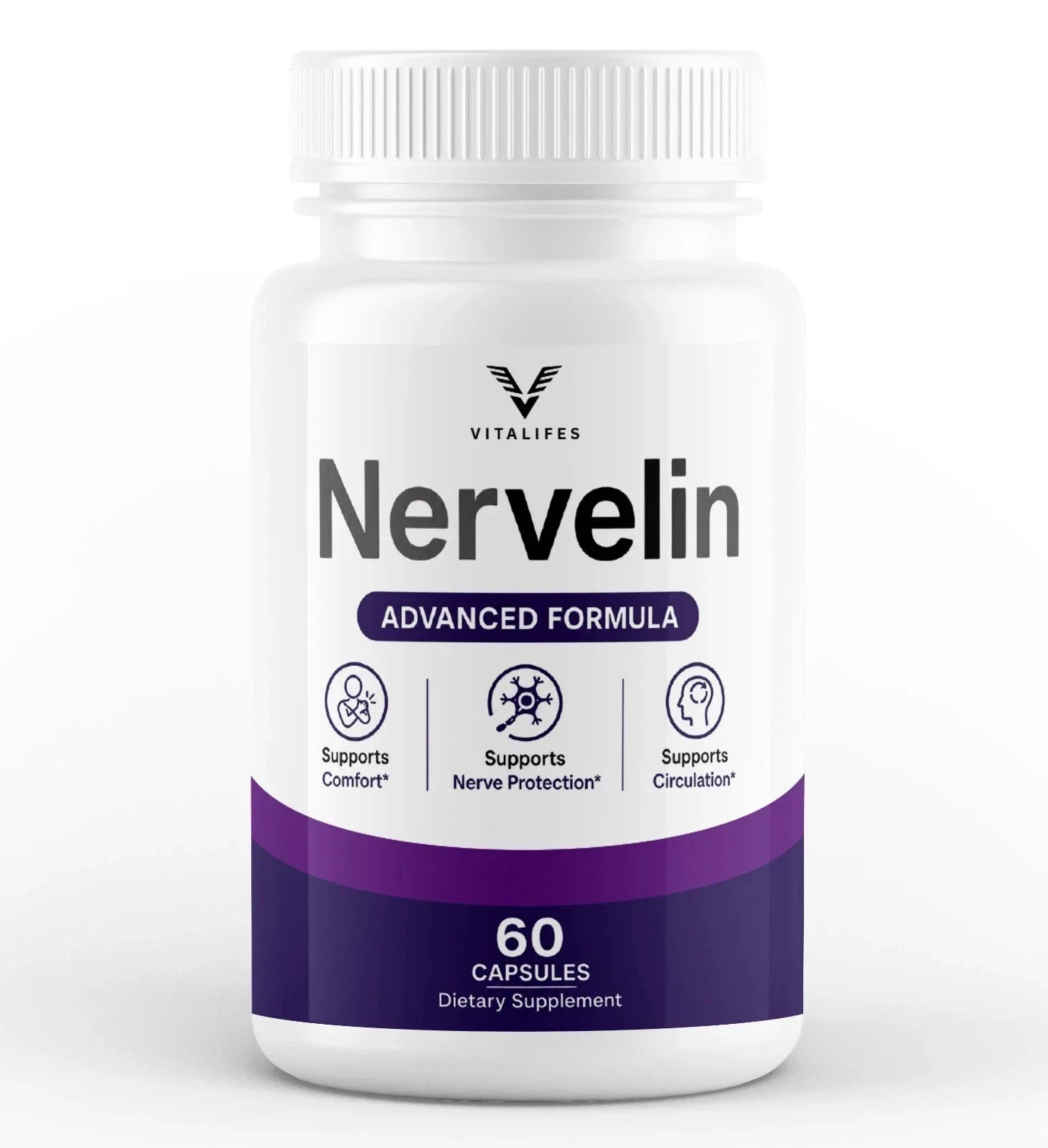
Where Nervelin sits against all of this
Nine botanicals under one blend weight, none of the three trialled compounds among them, and a panel this website reproduces in full so the comparison can be made.
Price shown at the seller’s checkout · money-back guarantee on the listing window
Order Nervelin On The Official WebsiteTwo capsules a day · 60 per bottle · lot NER-26/GO-5362