Nervelin Official Website › Blog › Raspberry Ketones And The Missing Trial
Raspberry Ketones And The Human Trial That Does Not Exist
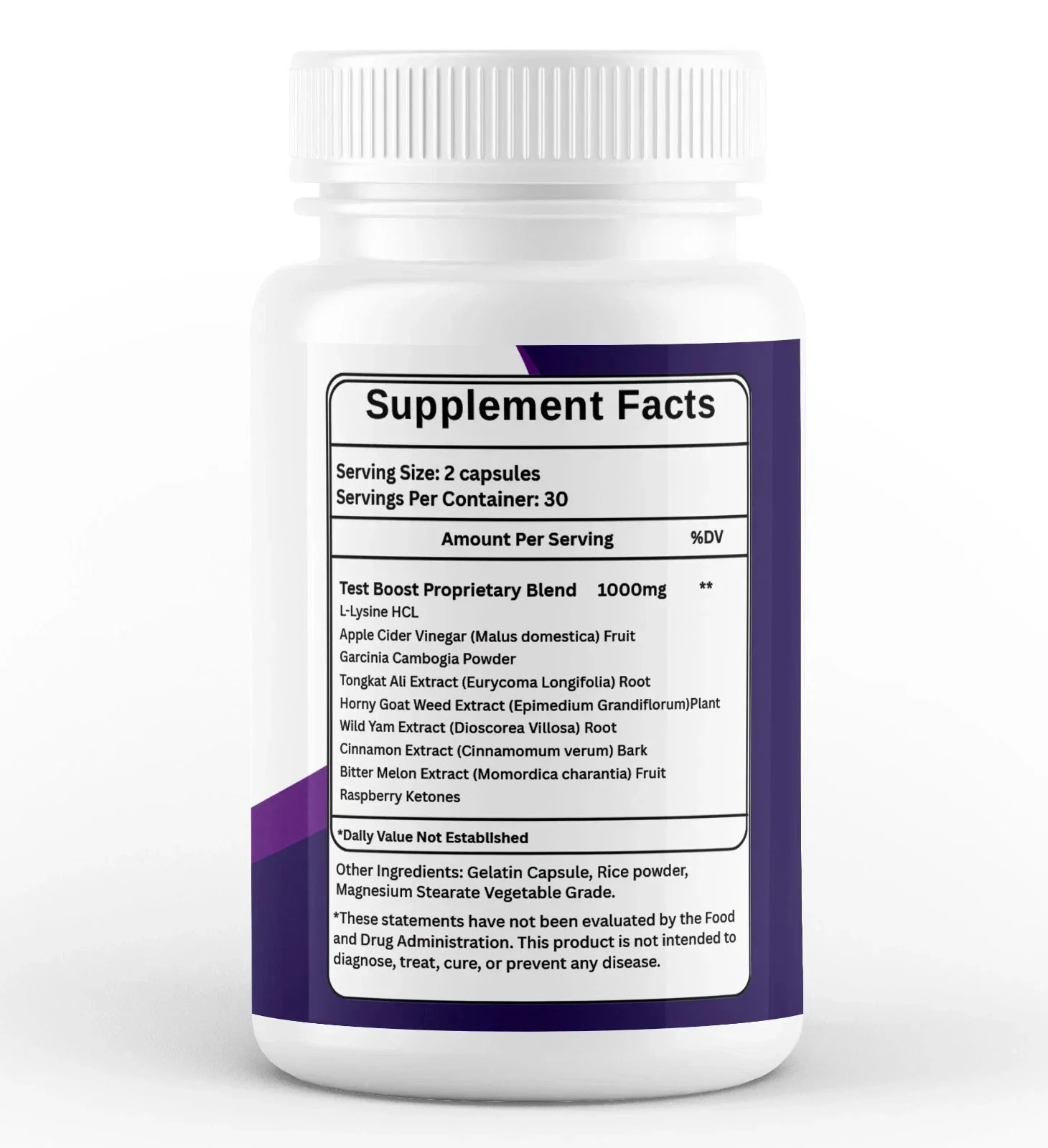
Eight of the nine names on this panel have a published human literature, including two whose headline results are unflattering. The ninth has none at all. The difference between a weak result and no result is the most useful distinction a label reader can learn, and this row is the clearest example of it.
- Raspberry ketone is 4-(p-hydroxyphenyl)-2-butanone, the compound behind the smell of a raspberry.
- No human trial of it exists, at any dose, for any outcome.
- The published record is a mouse study, a fragrance-industry safety dossier and a cell-based dermatology screening paper.
- It sits ninth of nine on this panel, which by labelling rule makes it the lightest row.
- An absent literature is different from a negative one, and both are different from a positive one.
What the compound actually is
Raspberry ketone is a small aromatic molecule, 4-(p-hydroxyphenyl)-2-butanone, and it is the principal aroma compound of the raspberry. It is one of the more expensive natural flavour materials to extract, which is why the overwhelming majority of what is sold is made synthetically and is chemically identical.
Its established industrial use is flavour and fragrance, and that is not a slight. It is where the compound has been studied, where its safety parameters are documented and where the exposure levels are understood.
Its supplement career began somewhere else entirely, with a rodent result and a great deal of television, and the supplement career has never acquired the human research the flavour career never needed.
The entire published record
This is not a summary of a large literature. It is the literature.
| What exists | What it is | What it can support |
|---|---|---|
| A mouse study | Raspberry ketone tested for adiposity in mice, where the effect tracked food intake | A hypothesis about rodents |
| A fragrance safety dossier | An industry safety assessment of 4-(p-hydroxyphenyl)-2-butanone as a fragrance ingredient | Safety parameters for a use that is not oral supplementation |
| A dermatology screening paper | A cell-based evaluation of tyrosinase-mediated metabolic activation | A laboratory observation about a chemical class |
| A human trial | None exists | Nothing |
Four rows, and the fourth one is the subject of this post.
The mouse study is the one everything else traces back to. It tested raspberry ketone for adiposity in mice and found that the effect did not survive once food intake was accounted for, which is a considerably less exciting finding than the one that reached the public.
The RIFM safety dossier is a fragrance-industry safety assessment of the compound. It is a serious document and it is about a different route and a different exposure from swallowing a capsule every day.
The cell-based screening paper examined tyrosinase-mediated metabolic activation in the context of skin depigmentation, which is a laboratory observation about a chemical class rather than a finding about a supplement.
Why an absence is not a negative result
These three states get collapsed into one another constantly, and keeping them apart is most of what reading a label well consists of.
- A positive result means somebody ran the study and the outcome moved. It can be argued with on design, size and duration.
- A negative result means somebody ran the study and the outcome did not move. It is informative, and on this panel the Garcinia and wild yam rows both carry one.
- An absence means nobody ran the study. Nothing follows from it in either direction, which is precisely the problem: there is nothing to reason from.
An absence is often defended with the observation that it has not been shown not to work. That is true and it is not a recommendation. The same sentence is true of every compound nobody has ever tested, which is most compounds.
The practical consequence for a buyer is simple. On a row with a literature, an amount can be compared with a trial dose. On a row without one, the amount could be anything and there is nothing to compare it against.
Every Nervelin row, with and without a literature
Nine ingredients, each one set beside the research that exists for it, including the two rows whose headline results are unflattering and the one that has none.
Price shown at the seller’s checkout · money-back guarantee on the listing window
Order Nervelin On The Official WebsiteTwo capsules a day · 60 per bottle · lot NER-26/GO-5362
The ninth row, and what descending order says about it
Ingredients inside a proprietary blend are listed in descending order of weight, so this row is the lightest of the nine.
How much lighter is not disclosed and cannot be inferred. It could be 80 mg and it could be 2 mg; both are consistent with everything printed on the carton. What is certain is that eight other names are heavier, and that the whole blend is 1,000 mg.
There is a case for saying that a small amount of an ingredient with no literature matters less than a small amount of one with a literature, because nothing is being missed either way. There is a better case for asking why it is on the panel at all.
How the other eight rows compare
| Ingredient on this panel | Human trials | What that means for the row |
|---|---|---|
| Tongkat Ali | Two controlled trials at 200 mg a day | A real record, measuring hormones and mood |
| Horny goat weed | One controlled trial at 740 mg a day | A real record, in post-menopausal women |
| Garcinia cambogia | Several, including a large negative one | A real record with an unflattering headline |
| Bitter melon | A twelve-week trial at 300 and 600 mg a day | A real record, on glucose markers |
| Cinnamon | Pooled across many glycaemic trials | A real record with wide variation between studies |
| Wild yam | One randomised trial, which found nothing | A real record, and a null one |
| L-lysine | A Cochrane review on cold sores | A real record, for a different condition |
| Apple cider vinegar | Single-meal glucose studies and a urology crossover | A real record, at the edges |
| Raspberry ketones | None | Nothing to compare an amount against |
Eight rows with a literature and one without. The last row is not a weak result; it is an absent one.
Eight rows with something to read and one without. Two of the eight carry results that do the product no favours, and printing those is the reason the rest of this website is worth anything.
That contrast is why this row is worth a post of its own. A panel where every row was equally unstudied would be a different and simpler object. A panel where eight rows have literatures and the ninth has none invites the obvious question about the ninth.
Why an ingredient with no trials gets onto a panel
Three reasons, and none of them requires anyone to have behaved badly.
The first is name recognition. Raspberry ketone had a period of enormous public visibility and a name a shopper recognises is worth something on a carton, whatever the evidence behind it.
The second is cost. A synthetic aroma compound is cheap by the standards of a standardised botanical extract, so a row can be added without much affecting what the capsule costs to fill.
The third is the blend line itself. In a fully declared panel every added row has to carry a number, and a small number invites a question. Inside a blend the row is a name, and a name costs nothing to add. A framework for ingredient-interpretation gaps describes what happens next: the reader supplies the meaning the label did not.
Five ways to spot a row with nothing behind it
- Search the ingredient name with the word trial rather than the word benefits. The second search returns retail pages; the first returns a literature or nothing.
- Check whether the evidence you find is in humans. A rodent result is a hypothesis.
- Check what the study was measuring. A safety dossier is not an efficacy study.
- Notice when an ingredient's fame arrived before its research did. That sequence is the reliable tell.
- Ask whether the row has a published dose at all. A compound with no trial has no dose, so no amount on any label can be the right one.
What this row is not being accused of
It is not being called unsafe. The fragrance safety dossier exists and the compound is a permitted flavour material used widely, which is more safety characterisation than several botanicals on this panel can show.
It is not being called a filler. Nobody outside the plant knows what weight it carries and this desk is not going to guess.
It is being called unstudied, which is a description rather than an insult, and it is the one word that belongs against this row on any panel that carries it. The federal guidance on using supplements wisely and the broader overview both make the same point in gentler language: a name on a label is not a finding.
A row with a negative trial has told you something. A row with no trial has told you only that it is on the label.
References
- Cotten BM, Diamond SA, Banh T, et al. Raspberry ketone fails to reduce adiposity beyond decreasing food intake in C57BL/6 mice fed a high-fat diet. Food Funct. 2017;8(4):1512-1518. PMID 28378858. Animal study. https://pubmed.ncbi.nlm.nih.gov/28378858/
- Api AM, Belsito D, Biserta S, et al. RIFM fragrance ingredient safety assessment, 4-(p-hydroxyphenyl)-2-butanone, CAS Registry Number 5471-51-2. Food Chem Toxicol. 2019;134 Suppl 2:110948. PMID 31756354. That CAS number is raspberry ketone. https://pubmed.ncbi.nlm.nih.gov/31756354/
- Nishimaki-Mogami T, Ito S, Cui H, et al. A cell-based evaluation of human tyrosinase-mediated metabolic activation of leukoderma-inducing phenolic compounds. J Dermatol Sci. 2022;108(2):77-86. PMID 36567223. https://pubmed.ncbi.nlm.nih.gov/36567223/
- Alsawadi A. The Perception Filler: A Proposed Conceptual Framework for Ingredient-Interpretation Gaps in Food Supplements. J Nutr. 2026;156(10):101803. PMID 42660500. https://pubmed.ncbi.nlm.nih.gov/42660500/
- National Center for Complementary and Integrative Health. Using Dietary Supplements Wisely. Confirmed live 19 September 2026. https://www.nccih.nih.gov/health/using-dietary-supplements-wisely
- National Center for Complementary and Integrative Health. Dietary and Herbal Supplements. Confirmed live 19 September 2026. https://www.nccih.nih.gov/health/dietary-and-herbal-supplements