Nervelin Official Website › Blog › Tongkat Ali At Its Trial Dose
Tongkat Ali: The Dose Its Own Trials Actually Used
Eurycoma longifolia has more human research behind it than anything else on this panel, and the number that keeps recurring in that research is 200 mg a day of a standardised extract. Knowing the number is the easy part. Knowing what those trials were measuring is what changes how the row reads.
- Two human trials anchor the Tongkat Ali literature and both used 200 mg a day of a standardised water-soluble extract.
- The longer of the two ran six months in older men with androgen deficiency.
- What those trials measured was hormones, mood and quality of life, not nerve symptoms.
- The form matters as much as the amount: a standardised water-soluble extract is a specific preparation, not a synonym for root powder.
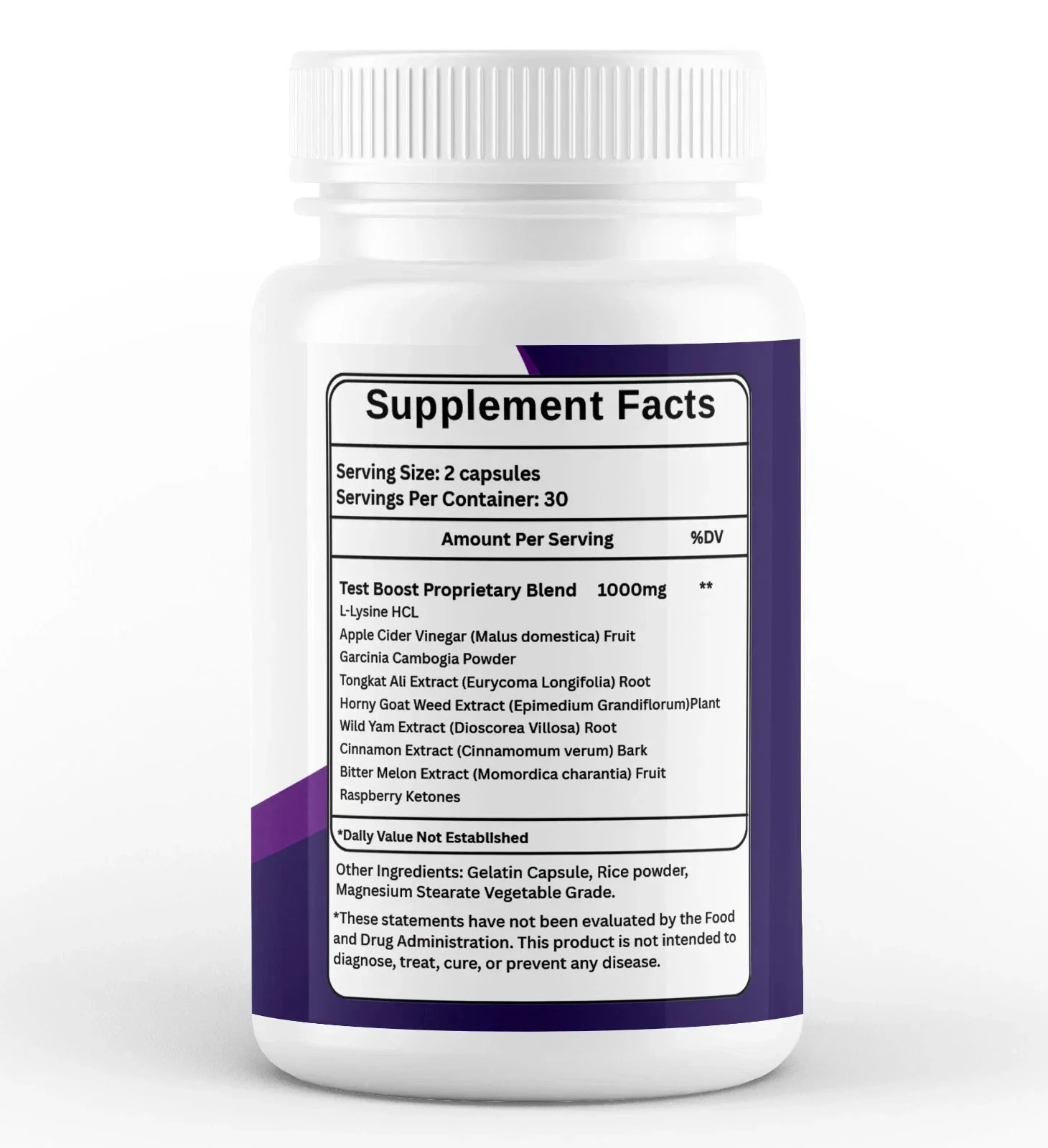
- On this panel the row is fourth of nine, sharing one 1,000 mg weight, with no ratio and no marker percentage printed.
The plant, and why the preparation is half the subject
Eurycoma longifolia is a slender tree of the Southeast Asian understorey, and it is the root that is used. That root is bitter, slow-growing and traditionally prepared as a decoction, which matters because the modern research did not use a decoction and did not use plain dried root either.
What the trials used was a standardised water-soluble extract. Water-soluble is the operative phrase: it selects one fraction of the root chemistry and leaves the rest behind. Standardised means the preparation is manufactured to hit a stated content of its marker compounds each time, so that one batch is comparable with another.
Those two words are the reason a trial result can be repeated at all. An unstandardised root powder at the same weight is a different ingredient, and the published literature does not transfer to it.
What a standardised extract is not
- It is not a stronger version of the same thing. It is a different preparation with a different composition.
- It is not implied by the word extract on a label. Extract with no ratio and no marker percentage is an unspecified concentration.
- It is not interchangeable with root powder at the same milligram weight.
- It is not, on its own, a guarantee of quality; it is a guarantee of consistency, which is a different and lesser promise.
The five studies that make up the record
The literature is not large but it is unusually coherent about its dose. Five studies between them cover men, women, younger adults and older ones.
| The study | Who it enrolled | Dose and duration | What it measured |
|---|---|---|---|
| Tambi 2012 | Men with late-onset hypogonadism | 200 mg a day of a standardised water-soluble extract | Testosterone and androgen-deficiency symptom scores |
| The six-month ADAM trial | Older men with androgen deficiency | 200 mg a day, six months, double-blind and placebo-controlled | Hormone measures and quality-of-life scores |
| Chan 2021 | Younger men | Short course, controlled | Reproductive hormone regulation |
| Talbott 2013 | Adults under moderate stress | Four weeks | Stress hormones and psychological mood state |
| Muniandy 2025 | Menopausal women | Water extract, controlled | Menopausal quality of life |
Five studies, five populations, and one dose figure that recurs: 200 mg a day of a standardised extract.
Tambi 2012 is the study most often cited on a carton, and it tested the standardised water-soluble extract in men with late-onset hypogonadism. The six-month ADAM trial is the more demanding of the two: double-blind, placebo-controlled, and long enough that a short-term fluctuation could not carry the result.
Chan 2021 looked at reproductive hormone regulation in a younger group, which is a different question from correcting a deficiency. Talbott 2013 went somewhere else again, measuring stress hormones and mood state over four weeks. Muniandy 2025 is the most recent and the furthest from the carton's own positioning, testing a water extract on menopausal quality of life.
Five populations, one dose. That consistency is the strongest thing about this ingredient's record and it is worth saying so before anything critical.
What those trials were actually measuring
Here is where a reader has to be careful, because the temptation is to treat a positive trial as a general endorsement.
Every outcome in that table is a hormone measure, a mood scale or a quality-of-life questionnaire. Not one of the five measured nerve conduction, sensory thresholds, neuropathic symptom scores, or anything a neurologist would recognise as a nerve endpoint.
That does not make the trials weak. A six-month placebo-controlled trial with hormone endpoints is a serious piece of work and most botanicals on most shelves have nothing comparable behind them. It makes them trials about something else.
An ingredient with good evidence for one outcome has no evidence for a different one until somebody runs that study. Transferring a result across endpoints is the commonest mistake made with a supplement label, and it is made by readers more often than by makers.
Read the whole Nervelin panel, not one row of it
Nine names under one weight, each one set beside the amount and the form its own published research used, with the rows that have no research said plainly.
Price shown at the seller’s checkout · money-back guarantee on the listing window
Order Nervelin On The Official WebsiteTwo capsules a day · 60 per bottle · lot NER-26/GO-5362
Setting the trials beside this panel
| In the trials | On this panel | |
|---|---|---|
| Dose | 200 mg a day | A share of a 1,000 mg blend, unstated |
| Form | A standardised water-soluble root extract | “Tongkat Ali Extract”, root, with no ratio or marker printed |
| Duration | Four weeks to six months | Thirty days to a bottle |
| Outcome measured | Hormones, mood, quality of life | Not measured; nothing published |
| Position | The only active in the capsule | Fourth of nine names sharing one weight |
Five rows, and the last one changes the meaning of the first four.
The first row is the one everybody looks at and the last row is the one that decides it. Two hundred milligrams a day is a real number, and if this capsule carried 200 mg of the standardised extract the row would be at its trial dose exactly.
It may. Nothing on the carton says otherwise, and Tongkat Ali is fourth of nine in descending order, so it is in the upper half of the distribution. What the carton also does not say is what the other eight rows are getting out of the same 1,000 mg, and 200 mg for this row leaves 800 mg for eight names.
That is not an accusation. It is the shape of the uncertainty, and it is the same shape for every row on the panel.
The nerve question, answered honestly
A reader who arrived here from a nerve-comfort carton deserves the direct answer: there is no human trial of Tongkat Ali for nerve symptoms, at any dose, in any population.
That absence is not unique to this ingredient and it is not evidence that the ingredient does nothing. It is evidence that nobody has looked, and a thing nobody has looked at cannot be sold on its results.
What the carton itself prints is “supports comfort”, “supports nerve protection”, “supports circulation”. Structure-and-function language of that kind is permitted for a supplement and does not assert a trial result. The federal overview of dietary supplements explains the framework in a page.
Why an ingredient like this ends up on a nerve label
Worth asking, because the answer is more interesting than cynicism allows.
Androgen deficiency and peripheral nerve complaints overlap in the population that buys both: men over fifty, often with metabolic problems, often tired, often uncomfortable in ways that are hard to name. A formula built for one of those markets fits the other without any reformulation, and the front of a carton can be printed to face either way.
That is what appears to have happened here. The blend on the back is called a test boost blend and its composition reads like one. The front of the carton is printed for nerve comfort. Both faces are the same nine ingredients.
Five questions worth asking of any Tongkat Ali row
- What amount does the panel print against this row? If it is inside a blend, the answer is none.
- Does it say standardised, and to what marker? Unspecified extract is an unspecified concentration.
- Is the plant part named? Root is what the trials used.
- Is the extract ratio printed? A 100:1 extract and a 2:1 extract at the same weight are different products.
- What was the trial that the seller is implicitly leaning on measuring? On this ingredient the honest answer is hormones, mood and quality of life.
What the row is worth, fairly stated
Better than most rows on most panels in this aisle. Tongkat Ali has two controlled human trials with a consistent dose, a named plant part on this label, and a preparation the research actually specifies.
Worse than a carton implies, on the specific question a nerve buyer is asking. The endpoints are hormonal and psychological, the dose on this panel is unstated, and the row sits inside a blend that eight other names are sharing.
Both of those are true at once, and holding them together is what reading a label properly consists of.
References
- Tambi MI, Imran MK, Henkel RR. Standardised water-soluble extract of Eurycoma longifolia, Tongkat ali, as testosterone booster for managing men with late-onset hypogonadism? Andrologia. 2012;44 Suppl 1:226-30. PMID 21671978. Dose used: 200 mg/day. https://pubmed.ncbi.nlm.nih.gov/21671978/
- Leitao AE, Vieira MCS, Pelegrini A, et al. A 6-month, double-blind, placebo-controlled, randomized trial to evaluate the effect of Eurycoma longifolia (Tongkat Ali) and concurrent training on erectile function and testosterone levels in androgen deficiency of aging males (ADAM). Maturitas. 2021;145:78-85. PMID 33541567. Dose used: 200 mg/day for 6 months. https://pubmed.ncbi.nlm.nih.gov/33541567/
- Chan KQ, Stewart C, Chester N, et al. The effect of Eurycoma Longifolia on the regulation of reproductive hormones in young males. Andrologia. 2021;53(4):e14001. PMID 33559971. https://pubmed.ncbi.nlm.nih.gov/33559971/
- Talbott SM, Talbott JA, George A, et al. Effect of Tongkat Ali on stress hormones and psychological mood state in moderately stressed subjects. J Int Soc Sports Nutr. 2013;10(1):28. PMID 23705671. https://pubmed.ncbi.nlm.nih.gov/23705671/
- Muniandy S, Yahya HM, Shahar S, et al. Effect of Eurycoma longifolia water extract (Physta) on menopausal quality of life and mood states. World J Clin Cases. 2025;13(31):109113. PMID 41283187. https://pubmed.ncbi.nlm.nih.gov/41283187/
- National Center for Complementary and Integrative Health. Dietary and Herbal Supplements. Confirmed live 19 September 2026. https://www.nccih.nih.gov/health/dietary-and-herbal-supplements