Nervelin Official Website › Blog › What Has Been Trialled For Nerve Symptoms
What Has Actually Been Trialled For Nerve Symptoms
Three compounds carry real peripheral-nerve trials: alpha-lipoic acid, benfotiamine and acetyl-L-carnitine. This is not a shopping list. It is a short course in reading those trials, because the endpoint a study measured decides what its result can honestly be used to say.
- Alpha-lipoic acid at 600 mg a day is the most-studied of the three, and its record is still mixed by the standards of a drug trial.
- Benfotiamine was tested at 300 mg and 600 mg a day, and the twelve-month study is the sobering one.
- Acetyl-L-carnitine was trialled at 2,000 mg a day, which is more than most whole blends weigh.
- The endpoint matters: a symptom score, an examiner's impairment score and a conduction measurement are three different levels of claim.
- None of the three compounds appears on this product's panel in any amount.
The three compounds, and their doses
The list is short and it has been short for twenty years, which is itself informative. These are the compounds a reader should be able to name before comparing any label in this category.
| Compound | Oral dose in its trials | The design that anchors it | What it measured |
|---|---|---|---|
| Alpha-lipoic acid | 600 mg a day | A critical review of thioctic acid in symptomatic diabetic polyneuropathy | Symptom scores rather than conduction |
| Benfotiamine | 300 mg and 600 mg a day | BENDIP, randomised and placebo-controlled, plus two later controlled studies | Neuropathy symptom and impairment scores |
| Acetyl-L-carnitine | 2,000 mg a day | A long-term randomised, double-blind, placebo-controlled study | Pain and nerve measures in diabetic neuropathy |
Three compounds, three designs, three sets of endpoints. None of the three is on this product's panel.
Notice the doses before anything else. Six hundred milligrams, three to six hundred milligrams, and two thousand milligrams. Those are large amounts of powder, and a capsule carrying all three at their trial doses would be handling more than three grams a day.
That single fact explains most of what a nerve supplement shelf looks like. A multi-ingredient blend physically cannot hold these three at the amounts their trials used, so a blend containing them at a fraction of those amounts is a different proposition from the trials it is leaning on.
Three kinds of endpoint, three strengths of claim
This is the part a carton never explains and the part that changes how every result in this field should be read.
| Endpoint | What it measures | How hard it is to move |
|---|---|---|
| Total Symptom Score | Patient-reported pain, burning, paraesthesia, numbness | The easiest of the three, and the most placebo-sensitive |
| Neuropathy Impairment Score | Examiner-assessed reflexes, strength and sensation | Harder, because somebody else is doing the assessing |
| Nerve conduction velocity | Electrophysiology, measured by machine | Hardest, and the one trials most often fail to move |
A result on the first row and a result on the third row are not the same kind of claim, and a carton never distinguishes them.
Why the first row is the softest
Patient-reported symptom scores are the most responsive to placebo in the whole of medicine, and pain and paraesthesia are exactly the sensations that fluctuate with sleep, mood, temperature and attention. A trial showing an improvement in a total symptom score has shown something real about how people felt; it has not shown that a nerve changed.
Why the third row is the hardest
Nerve conduction velocity is measured by an instrument and does not care how anybody feels about it. It is also slow to move and hard to shift in a trial of realistic length, which is why so many studies in this area report symptom improvement without conduction improvement and why that combination is the normal result rather than a suspicious one.
Where Nervelin sits against all of this
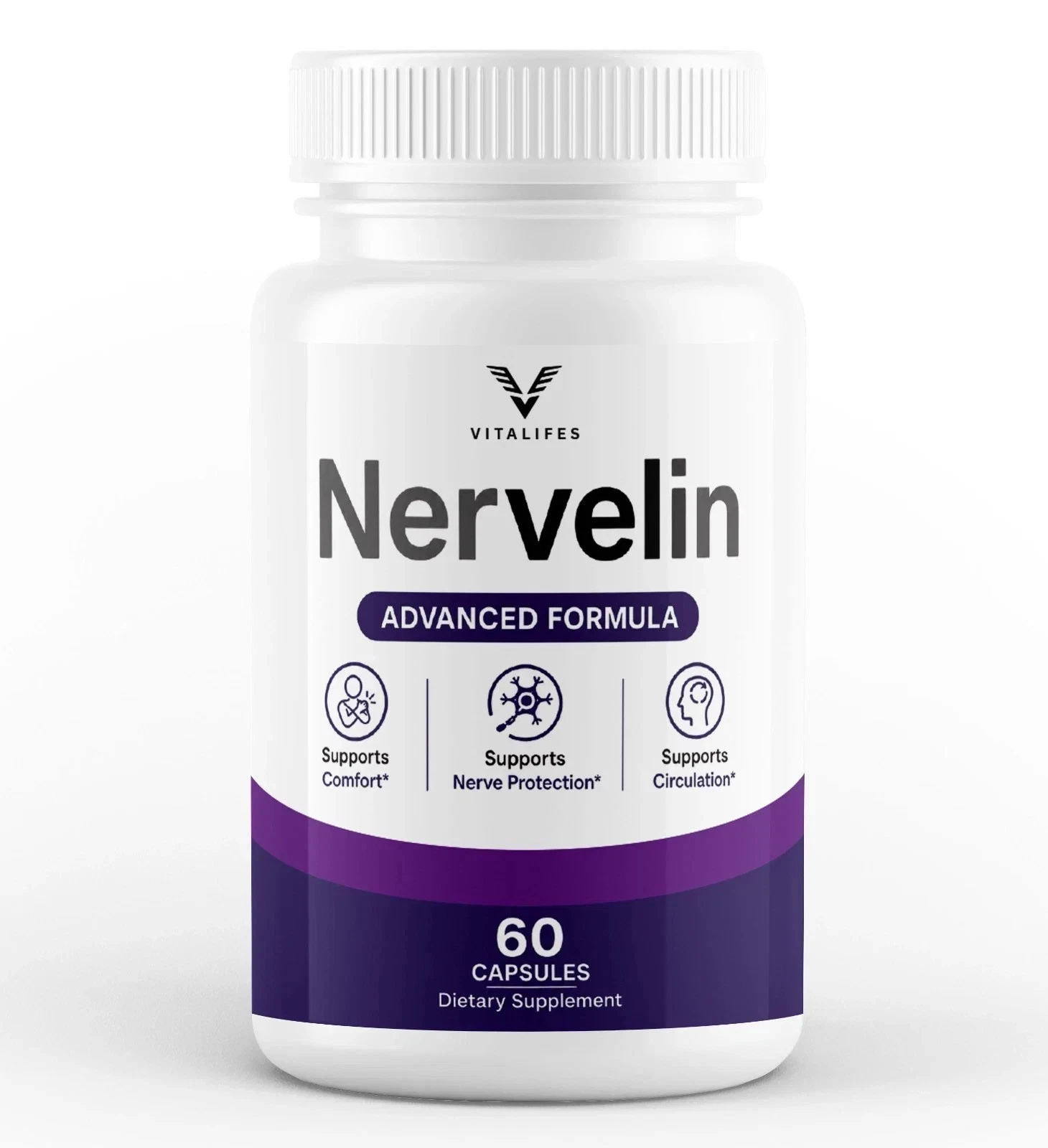
Nine botanicals under one 1,000 mg weight, none of the three trialled compounds among them, and a panel this website reproduces in full so the comparison can be made rather than assumed.
Price shown at the seller’s checkout · money-back guarantee on the listing window
Order Nervelin On The Official WebsiteTwo capsules a day · 60 per bottle · lot NER-26/GO-5362
Alpha-lipoic acid: the most studied and still mixed
A critical review of thioctic acid in symptomatic diabetic polyneuropathy is the anchor of this literature. The oral dose the field settled on is 600 mg a day, and the outcomes that move most reliably are the symptom scores.
Alpha-lipoic acid is an antioxidant, which is both its appeal and its difficulty. The mechanism is plausible and general, and a plausible general mechanism is the hardest kind to prove for a specific condition. The intravenous work is stronger than the oral work, which is an awkward detail for anything sold in a capsule.
The fair summary is that this is the best-supported compound in the category and that best-supported is doing a lot of work in that sentence. A reader who takes away that alpha-lipoic acid is proven has read the literature more generously than it deserves.
Benfotiamine: what twelve months showed
Benfotiamine is a fat-soluble derivative of thiamine, and the derivative exists because the parent vitamin is absorbed poorly at the amounts these trials wanted to test.
The BENDIP randomised trial tested 300 mg and 600 mg a day against placebo in diabetic polyneuropathy. A later controlled study added to the picture in a sensory-focused population.
The BOND study is the one that costs this compound the most, and it is the reason a careful writer names it. A randomised, double-blind, placebo-controlled trial run over twelve months is a far more demanding test than a twelve-week one, and longer trials in this field have a habit of narrowing results rather than widening them.
Short trials in nerve symptoms report more than long ones do. That is true across this literature and it is the single best reason to read the duration of a study before reading its conclusion.
Acetyl-L-carnitine: the dose problem
A long-term randomised, double-blind, placebo-controlled study in diabetic neuropathy is the main record here, run at 2,000 mg a day orally.
Two grams is the whole story of why this compound almost never appears in a blend at anything like its trial amount. A two-capsule serving weighing 1,000 mg in total cannot contain 2,000 mg of anything, and a blend that lists acetyl-L-carnitine alongside eight other names is listing it at a fraction of what was tested.
That is not a criticism of any particular product. It is arithmetic about capsules, and it is the reason single-ingredient bottles exist in this corner of the shelf while multi-ingredient blends dominate everywhere else.
Where supplements sit on the actual treatment ladder
The 2024 review of current US guidelines for painful diabetic peripheral neuropathy is worth reading by anybody shopping in this aisle, for one reason: the things on that ladder are not the things on the shelf.
Guideline treatment is built around glycaemic control where diabetes is the cause, and around a small set of prescription medicines for the pain. Supplements appear at the margins, as adjuncts, with the evidence described honestly as limited.
None of that makes a supplement pointless. It makes it an addition to something rather than a substitute for it, and it explains why identifying the cause of a symptom matters more than choosing between two bottles.
Why none of the three is on most nerve labels
- Dose. Six hundred, six hundred and two thousand milligrams do not fit into a capsule alongside anything else.
- Cost. All three are meaningfully more expensive per gram than a botanical powder.
- Formulation. Alpha-lipoic acid and benfotiamine have handling requirements that a dried plant extract does not.
- Positioning. A single-ingredient bottle looks sparse next to a carton listing nine names, and a shelf rewards the longer list.
- Regulation. Structure-and-function language is available to any supplement, so a formula does not need evidence to be allowed to say supports.
Those five reasons together explain the shape of this aisle better than any claim about anybody's motives. A market that rewards long ingredient lists and cannot fit the best-evidenced compounds into one will fill the shelf with something else.
The exception proves the point. Where these three compounds do appear on a shelf, they appear alone, in a bottle with one name on the front and one row on the panel, usually at a capsule size a buyer notices. That is what a formula built around the evidence looks like, and it looks nothing like the crowded cartons on either side of it.
How to use this when reading any carton
- Look for the three names first. Their presence or absence is the single fastest read on any nerve label.
- If one is present, find the amount and compare it with 600 mg, 300 to 600 mg or 2,000 mg as appropriate.
- If the amount is inside a proprietary blend, treat it as unknown rather than as present.
- Ask what endpoint the evidence being leaned on actually measured, and prefer the harder endpoints.
- Read the duration. A twelve-week result and a twelve-month result are different claims.
- Remember that the cause of the symptom decides what helps it, and that no carton can identify a cause.
Three compounds carry the nerve trials, their doses are large, and a blend that cannot fit them is competing on something other than evidence.
References
- Ziegler D. Thioctic acid for patients with symptomatic diabetic polyneuropathy: a critical review. Treat Endocrinol. 2004;3(3):173-89. PMID 16026113. Dose used: 600 mg/day. https://pubmed.ncbi.nlm.nih.gov/16026113/
- Stracke H, Gaus W, Achenbach U, et al. Benfotiamine in diabetic polyneuropathy (BENDIP): results of a randomised, double blind, placebo-controlled clinical study. Exp Clin Endocrinol Diabetes. 2008;116(10):600-5. PMID 18473286. Doses used: 300 mg/day and 600 mg/day. https://pubmed.ncbi.nlm.nih.gov/18473286/
- Stirban OA, Zeller-Stefan H, Schumacher J, et al. Treatment with benfotiamine in patients with diabetic sensorimotor polyneuropathy: A double-blind, randomized, placebo-controlled, parallel group pilot study over 12 months. J Diabetes Complications. 2020;34(12):107757. PMID 33069584. https://pubmed.ncbi.nlm.nih.gov/33069584/
- Bonhof GJ, Sipola G, Strom A, et al. BOND study: a randomised double-blind, placebo-controlled trial over 12 months to assess the effects of benfotiamine on morphometric, neurophysiological and clinical measures in patients with type 2 diabetes with symptomatic polyneuropathy. BMJ Open. 2022;12(2):e057142. PMID 35115359. https://pubmed.ncbi.nlm.nih.gov/35115359/
- De Grandis D, Minardi C. Acetyl-L-carnitine (levacecarnine) in the treatment of diabetic neuropathy. A long-term, randomised, double-blind, placebo-controlled study. Drugs R D. 2002;3(4):223-31. PMID 12455197. Dose used: 1,000 mg/day intramuscular for 10 days, then 2,000 mg/day orally for the remaining 355 days. https://pubmed.ncbi.nlm.nih.gov/12455197/
- Mallick-Searle T, Adler JA. Update on Treating Painful Diabetic Peripheral Neuropathy: A Review of Current US Guidelines with a Focus on the Most Recently Approved Management Options. J Pain Res. 2024;17:1005-1028. PMID 38505500. https://pubmed.ncbi.nlm.nih.gov/38505500/